Texel

From a Living Room Prototype to a Global 3D Body Scanning Platform

Co-Founder & CPO  ·  Hardware + AI  ·  30+ Countries  ·  3 US Patents

My Role

  • Co-Founder & CPO
  • Product Strategy & Architecture
  • Enterprise Sales & Partnerships
  • Fundraising & Investor Relations
  • Board Member (current)

Key Facts

  • Founded: 2014
  • HQ: London, UK
  • Revenue: £3.7M+
  • Capital: £1.3M raised
  • Valuation: £7.1M
  • Team: 25 at peak
  • Status: Cash-positive

Partners

Marks & Spencer
Founders Factory
Plug and Play
Museum of the Future

Texel is a deep-tech venture I co-founded and scaled from a DIY prototype to a Top-3 global 3D body scanning platform. The company develops hardware and AI solutions for human body capture, measurement and virtual fitting — deployed across 30+ countries from Marks & Spencer in London to the Museum of the Future in Dubai.

This is a story about building a hard-tech business from zero — with no lab, no industry connections, and £20,000 of personal savings.

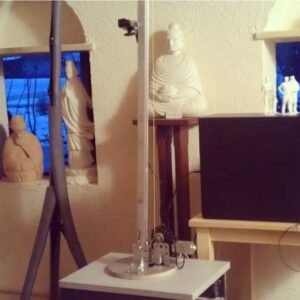
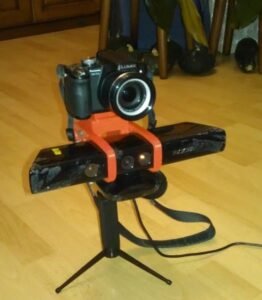
In late 2013, I started experimenting with 3D sensors, open-source software, and hardware from DIY stores. My first prototype: a depth sensor mounted on a sliding wardrobe rail, powered by a car power window motor, spinning a person on a Lazy Susan turntable. It was ugly. It worked.

Where it started
 

£3.7M+

Revenue

30+

Countries

3

US Patents

£1.3M

Capital Raised

Scanner Evolution

From the first prototype to a globally deployed product line — each generation solving new problems.

Portal BX

The first commercial model. Compact single-sensor design. Proved the concept could work outside the lab. First international sales.

Portal MX

Rated Top-3 globally. Multi-sensor array, full-colour 3D capture in 30 seconds. 200+ body measurements. The workhorse deployed in M&S, museums, and research facilities worldwide.

Portal RX

Next-generation architecture. Improved speed, accuracy and form factor. Designed for high-traffic retail and fitness environments.

Portal FX

The latest evolution. Compact footprint, fastest scan time, highest resolution. Built for scale deployment across retail chains.

Enterprise Case Studies

VISA — FIFA World Cup 2018

3D avatar activation at the FIFA World Cup. Fans scanned and turned into personalised animated avatars. Ultra-personalized content driving brand engagement at scale.

Marks & Spencer — Virtual Fitting

300K customers in A/B test. 3x conversion uplift. 8% higher average order value. From in-store scanner pilots to e-commerce widget deployment.

Product Evolution: Hardware → SaaS → AI → Hardware

The scanner was just the beginning. We turned hardware data into software products — then brought the technology full circle, back into physical retail.

Step 1 · Hardware → SaaS

AI Size Advisor & Virtual Try-On Widget

The key business pivot. Instead of selling scanners to stores, we built a lightweight widget that plugs into any e-commerce site. A customer answers 4 questions → gets a personalised size recommendation with 90% accuracy. Plus GAN-based virtual garment transfer using existing product photos — no digital blueprints needed.

1,100+ organic Shopify merchant installs. M&S A/B test: 3x conversion uplift, 8% higher AOV.

Step 2 · SaaS → Open AI

Virtual Try-On on HuggingFace

We open-sourced a diffusion-based virtual try-on model and published it on HuggingFace Spaces. Upload a person photo + a garment photo → the AI generates a realistic image of the person wearing the garment.

This drove 1.8M+ monthly active users and validated the technology with the global AI community — a developer activation signal that the core tech has real demand beyond enterprise fashion.

Step 3 · AI → Back to Hardware

Texel Smart Mirror

The full circle. We took the virtual try-on AI that proved itself online and put it back into physical hardware — an interactive mirror for retail stores and shopping centres. Customers stand in front of the mirror and see themselves wearing different outfits instantly, without changing clothes.

The recommendation engine helps stores maximise basket size while customers discover more items that fit. Launched at Kornit London Fashion Week 2022 and V&A Museum during London Design Festival.

The Data Moat

Every product above is powered by the same proprietary dataset — the world’s largest collection of colour 3D human body scans.

150K+

3D Body Scans

30M+

Data Points

30+

Countries

3

US Patents

Scaling: From Prototype to 30 Countries

Instead of relying on existing body measurement approaches, I bet on building a direct 3D capture system that would create the world’s largest proprietary dataset. The data advantage compounded: more scans → better algorithms → more accurate fitting → more customers.

The key pivot was moving from hardware-only sales to a software-first model. The scanner was our identity, but the e-commerce widget became our business model.

Raised £2.34M in venture capital including a strategic investment from Founders Factory alongside Marks & Spencer.

Milestones

2014
First prototype. £20K personal investment.
2016
First international customers.
2018
Founders Factory + M&S. VISA World Cup.
2019
eTail UK Dragon’s Den winner. M&S pilot: 3x conversion.
2021–22
3 US Patents. Best Startup — Retail Week Live.
2023
Board Member. Company cash-positive.

Pitching & Fundraising

From early investor meetings to international stage — how the pitch evolved as the company grew.

Founders Factory Investor Showcase

2019

Pitched to Founders Factory investors and M&S executives. The pitch that secured the strategic £250K investment and M&S partnership. Demonstrated product-market fit with pilot data showing 3x conversion uplift.

Texel.Moda — WebSummit Startup Showcase

2021

Showcased the SaaS pivot — from hardware 3D scanners to the Texel.Moda virtual try-on widget. Presented the AI-powered garment transfer technology and the Shopify integration strategy to a global audience.

Retail Week Live — Winner

2022 — Best Startup Winner

The culmination of the pitch journey. Won Best Startup at Retail Week Live UK — the leading retail technology competition. The pitch showcased the full evolution: from hardware prototype to AI-powered SaaS with proven enterprise traction.

Building the Team

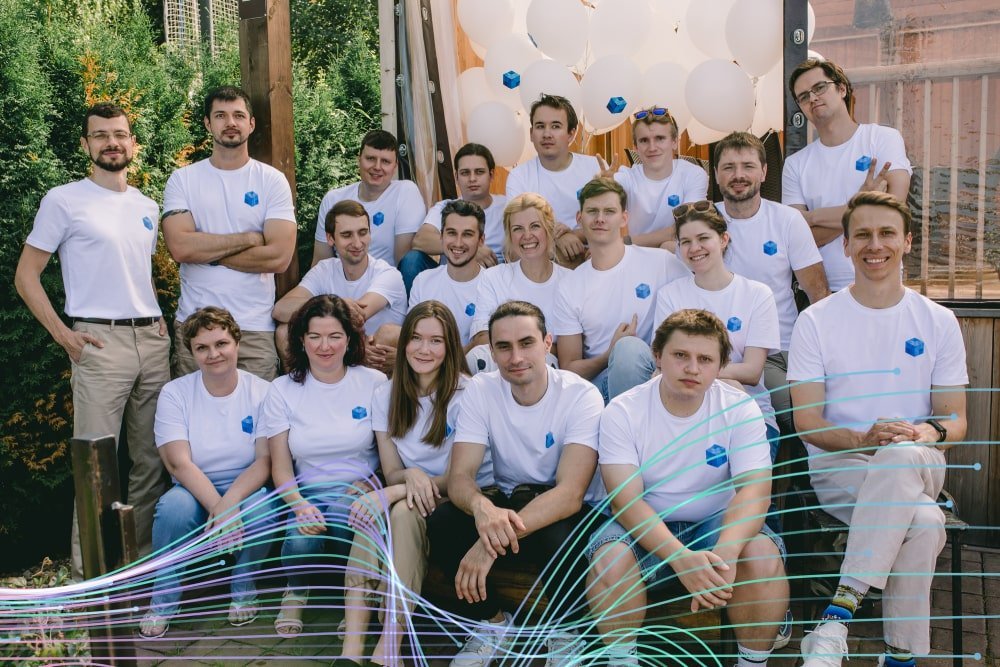
Recruited the co-founding team (Chief Science Officer, CTO) from early prototyping days and grew the company to 25 people across product, engineering, marketing and sales. Attracted world-class talent in computer vision and AI — researchers and engineers who could have worked anywhere but chose to build something from zero.

We collaborated with leading research labs in computer graphics and computer vision, and presented at academic conferences including IEEE. Co-authored the IEEE Standard for 3D Body Processing — helping to transition the industry from 2D measurements to 3D body representation.

Top 50 Global Digital Retail Leaders

Retail Week

3 US Patents

AI Virtual Fitting

eTail UK Dragon’s Den Winner

Next Best Thing in Retail Tech

IEEE Standard

3D Body Processing Co-Author

What I Learned

01
Data moats are real. The 150K scan dataset became our strongest competitive advantage — every new scan made the algorithm better.
02
Hardware-to-SaaS pivots require killing your darlings. The scanner was our identity, but the widget was our business model.
03
Enterprise sales is relationship architecture. The M&S deal took 2 years from first meeting to A/B test. Patience and multiple proof points.
04
Build the thing that doesn’t scale first. The wardrobe-rail prototype was absurd. It was also the only way to prove the concept.
05
Unit economics don’t lie. We became cash-positive on scanners before pivoting to SaaS — financial discipline from day one.

Interested in the full story?

Let’s talk about venture building, AI products, or how to turn a wardrobe rail into a business.